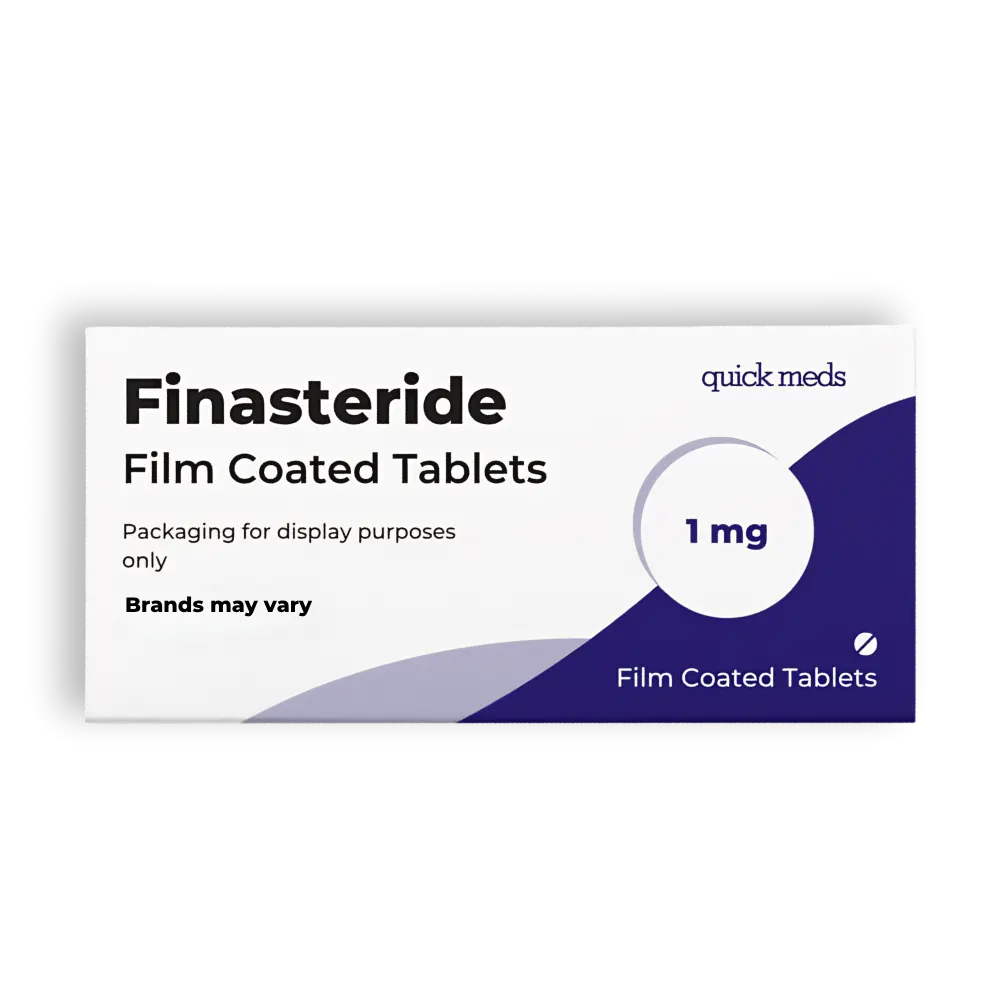
Finasteride 1mg Tablets
What Is Finasteride and How Does It Work?
Finasteride is a prescription-only medication used for treating male baldness and is available via the Quick Meds website. As a prescription only treatment, you will be required to complete an online questionnaire. This is assessed by a prescriber who will assess your suitability for the medication.
Containing the active ingredient finasteride 1mg, the tablets are widely available from various manufacturers as different generic versions. Whilst the packaging may be slightly different, they will all contain finasteride and will work in the same way. It is also available as the brand Propecia.
Finasteride 1mg tablets are licensed and prescribed for male pattern baldness, also known as androgenetic alopecia. A higher dose 5mg of finasteride can be used to treat benign prostatic hyperplasia.
Finasteride helps reduce further hair loss by addressing underlying hormonal mechanisms that cause male pattern baldness. It can also promote hair regrowth, especially at the crown and hairline where male pattern baldness typically begins.
Finasteride is used to slow hair loss and promote hair regrowth but must be used continuously for maximum benefit. The tablets must only be taken by men with male pattern baldness and not for use by women or children and adolescents.
Finasteride works by reducing levels of dihydrotestosterone (DHT) - the hormone responsible for hair loss. High DHT levels can shrink hair follicles and shorten the hair growth cycle - leading to hair thinning and hair falling out faster.
Finasteride inhibits an enzyme in the body known as 5-alpha reductase. 5 alpha-reductase converts testosterone (another male sex hormone) into DHT - resulting in high levels of DHT which causes androgenetic alopecia. Finasteride belongs to a group of medicines called 5-alpha reductase inhibitors. By inhibiting this enzyme, circulating levels of DHT decrease, serving a viable option to treat male pattern baldness.
Finasteride Results Timeline: What to Expect at 3, 6, and 12 Months
Finasteride works by lowering DHT levels in the scalp - the hormone primarily responsible for hair loss. Hair grows in long cycles and results of taking finasteride will appear gradually rather than immediately.
Month By Month Finasteride Timeline
Months 0-3: Hormonal changes begin
The suppression of DHT will start within a few days of beginning treatment but the cosmetic changes are not visible at this stage. Some men will experience increased shedding during the first three months but this is normal and usually indicates follicles shifting into a new growth cycle - this increased shedding does not mean the treatment is not working for you.
Months 3-6: Stabilisation phase
For many men, the shedding will slow down and hair loss will begin to stabilise. Though the improvements are subtle in this stage, there may be early thickening of existing hairs. This is the stage where individuals will start to notice that the hair loss is no longer progressing.
Months 6-12: Visible improvement stage
There will be noticeable gains in density of the hair at this stage; particularly mid-scalp and at the crown. The hair may also feel stronger, darker and more resilient. Daily use of treatment is very important as this will deliver consistent results.
Months 12-24: Peak results window
Finasteride peaks results at 12 to 24 months - this is when most men will notice maximum benefits. Finasteride halts hair loss in 90% of men and promotes regrowth in approximately 66% of men.
How successful the treatment is will depend on when the treatment begins. If finasteride is started in earlier stages of male pattern hair loss (lower on the Norwood scale), there will generally be better thickening and regrowth. Those that have more advanced hair loss will often see stabilisation rather than full reversal of the hair loss.
In summary, finasteride takes 3 to 6 months to show visible results, with most men seeing stabilisation in these months. Peak improvements in density and thickness usually occur between 12 and 24 months of consistent daily use.
Results Timeline Table
Period | What to Expect | Notes |
|---|---|---|
0–3 months | DHT reduction begins. Possible shedding phase. | Shedding is normal - weaker hairs making way for new growth |
3–6 months | Reduced shedding. Early thickening visible in some men. | First signs of stabilisation |
6–12 months | Noticeable density improvement, especially at crown. | Most men see clear results by this stage |
12–24 months | Peak results. Thicker, more resilient hair. | Continued use required to maintain |
If stopped | Benefits reverse within 6–12 months. | Hair loss resumes as DHT levels return |
Results can vary from individual to individual.
Finasteride Side Effects
Most men taking finasteride do not usually experience side effects.
Like all medicines, finasteride can cause side effects. These are usually mild in nature and improve with time.
Common side effects
Finasteride may cause a decreased libido, erectile dysfunction and ejaculatory disorders. Clinical trials have shown these side effects to occur in less than 2% of men using treatment. These side effects often resolve once treatment has stopped and may even resolve during treatment.
Uncommon side effects
Less common side effects could be signs of depression, changes in breast tissue and skin reactions. If you or someone close to you notice a change in your mood, you should speak to your doctor for further assessment.
Other side effects
The frequency of the following side effects is not known.
Palpitations
Male infertility
Suicidal behaviors
Testicular pain
Blood in semen
Anxiety
If any of these side effects occur, get in touch with your prescriber for further medical advice.
If you currently suffer from mental health issues, choosing an alternative treatment, such as minoxidil, may be beneficial.
Crushed or broken finasteride tablets should not be handled by females of child-bearing. These pose a risk to an unborn baby.
Post-finasteride syndrome is when there are persistent sexual, neurological, mental and physical side effects in patients who have used finasteride for hair loss. This has been reported by a small number of males who have used this treatment. It is important to remember that post-finasteride syndrome is very rare.
Finasteride vs Minoxidil vs Dutasteride
There is more than one option available to treat hair loss and deciding between them can be difficult if you’re not certain about how they work. Here is a quick summary to help you make that decision.
Finasteride works by reducing and blocking the scalp DHT production and addresses the root hormonal trigger of male pattern hair loss. Due to the way it works, it usually is one of the first options for hair loss in the UK.
Minoxidil works on the follicles locally rather than hormonally and by improving blood flow to the follicles.
It helps to maintain hair in the growth phase for longer which can improve the density and thickness.
Dutasteride is similar to finasteride but is more potent. Dutasteride blocks type 1 and type 2 5-alpha reductase and is usually associated with a higher risk of side effects.
Using both finasteride and minoxidil together produces superior results rather than using finasteride alone, as monotherapy. The combination of these is considered the most effective non-surgical treatment approach.
Comparison Table
Feature | Finasteride | Minoxidil | Dutasteride | Topical Finasteride |
|---|---|---|---|---|
Type | Oral tablet | Topical solution/foam | Oral capsule | Topical spray/solution |
Mechanism | Blocks DHT (5AR type 2) | Improves follicle blood flow | Blocks DHT (5AR types 1+2) | Blocks DHT locally |
Results timeline | 3–12 months | 2–6 months | 3–12 months | 6–12 months |
Side effects | Sexual (1–2%) | Scalp irritation | Sexual (higher rate) | Lower systemic risk |
Prescription | Yes | No (OTC) | Yes (off-label) | Private clinics only |
Best for | Hormonal hair loss cause | Stimulating regrowth | Non-responders to finasteride | Side effect concerns |
How to Take Finasteride
Simple and clear. Emphasise consistency. Warn against crushing tablets. Note that 5mg is for prostate, not hair loss.
Finasteride is taken as a single 1mg tablet once daily, with or without food. Finasteride 5mg is taken for the prostate.
It is important to adhere to the prescribed dosage. A higher dose of finasteride will not lead to faster results but can increase the risk of adverse effects.
If you forget a dose, omit this and take your next dose as scheduled. Do not take additional finasteride tablets to make up for a missed dose.
Consistency is crucial. Finasteride requires constant daily use and can take between 3-6 months before the effects can be seen. If you stop taking finasteride, the beneficial effects can reverse.
Finasteride must not be crushed or broken and females of childbearing potential should avoid handling crushed or broken tablets as they can cause harm to an unborn baby.
What Happens When You Stop Taking Finasteride?
Finasteride is an effective treatment whilst you continue to use it. However, it does not change the underlying cause of male pattern baldness and stopping finasteride reverses the benefits within 6 to 12 months.
Finasteride is not a cure for hair loss and most evidence shows that benefits begin to reverse within 6 months of stopping, with hair density typically returning to its pre-treatment level within 9 to 12 months. Once the medication levels decrease, the DHT levels will return to baseline allowing the miniaturization (progressive shrinking) of hair follicles to continue. Hair that was preserved or regrown during treatment will eventually be lost.
Finasteride is a maintenance treatment, rather than a cure and is usually prescribed long-term by many UK clinicians.
Frequently Asked Questions
Everything you need to know
How long does finasteride take to work?+−
Finasteride typically begins to show results after 3-6 months of daily use. Initial shedding in the first few weeks is normal and not a cause for concern. Peak results are usually seen at 12 to 24 months of consistent daily use. Patience and daily consistency are essential for the best outcome.
What happens when you stop finasteride?+−
If you stop taking finasteride, DHT levels return to pre-treatment levels and hair loss resumes. Benefits typically reverse within 6 to 12 months of stopping. Any hair regrown during treatment will gradually be lost. This is not a permanent cure but an ongoing treatment.
Finasteride vs minoxidil: which is better?+−
They work differently and are often used together. Finasteride targets the hormonal cause of hair loss by blocking DHT, while minoxidil stimulates blood flow to hair follicles. Clinical research shows combining both produces superior results to either treatment alone.
Is finasteride safe long term?+−
There is no fixed limit to how long finasteride can be safely used. Many UK clinicians prescribe it indefinitely. Side effect rates decrease over time, falling below 0.3% after five years of use. Regular check-ups with your prescriber are recommended.
Does finasteride regrow hair?+−
Finasteride halts hair loss in approximately 90% of men and promotes regrowth in around 66%. It is most effective for hair thinning at the crown and mid-scalp. Results depend on how early treatment is started — men with early-stage loss see the most significant improvement.
What is post-finasteride syndrome?+−
A small number of men report persistent sexual or mood symptoms after stopping finasteride. This is an area of ongoing research and is not fully understood. If you experience persistent side effects after stopping, consult your GP. Most men taking finasteride do not experience these issues.
Can Finasteride regrow lost hair?+−
Finasteride is more effective at preventing further hair loss, but can promote hair regrowth in men, particularly in areas where hair loss is not complete.
Is Finasteride safe?+−
Whilst some men may experience side effects, finasteride is a generally well tolerated medication. Rarely, some patients may continue to experience adverse effects once treatment has been stopped.
Can I buy Finasteride without a prescription?+−
As a prescription treatment, you cannot buy finasteride without a prescription. Due to the risks associated with the treatment, a prescriber is optimally placed to provide the clinical assessment required for a safe treatment.
What’s the difference between generic Finasteride and branded Propecia?+−
Both generic finasteride and the branded form Propecia contain finasteride 1mg and work in the same way. As a generic version, finasteride prices tend to be lower than the branded form.
Does finasteride lower testosterone?+−
Finasteride does not lower testosterone levels but may in fact slightly increase them. Finasteride prevents testosterone from being converted into dihydrotestosterone (DHT).